To 3v3 or Not to 3v3, that's the question
There is a great civil war brewing in grassroots football.
Not over VAR.
Not over orange slices.
Not even over whether a six year old really needs £140 boots to play on a muddy rec.
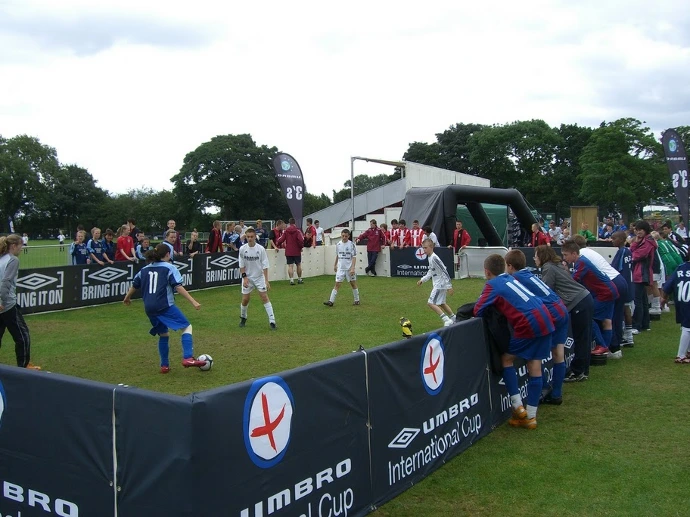
No, the latest battlefield is this: from the 2026/27 season, the FA’s Future Fit plans say U7s will begin with 3v3 as the entry format, rather than starting with 5v5. The FA’s case is simple enough: more touches, more involvement, more activity, more chances to try skills, and a better first taste of football for young players. The wider Future Fit changes also keep players in smaller formats for longer, with 11v11 moving to U14.
And so the question arrives, dressed in shin pads and parental anxiety: To 3v3, or not to 3v3?

The case for 3v3: tiny footballers, massive involvement
The people in favour of 3v3 tend to say the same thing: at U7, football should feel less like traffic and more like actual playing. In 5v5, there is always the danger that one child turns into prime Messi, one becomes a part time defender, one starts picking daisies and one spends half the match wondering whether the clubhouse sells chips.
In 3v3, hiding is much harder.
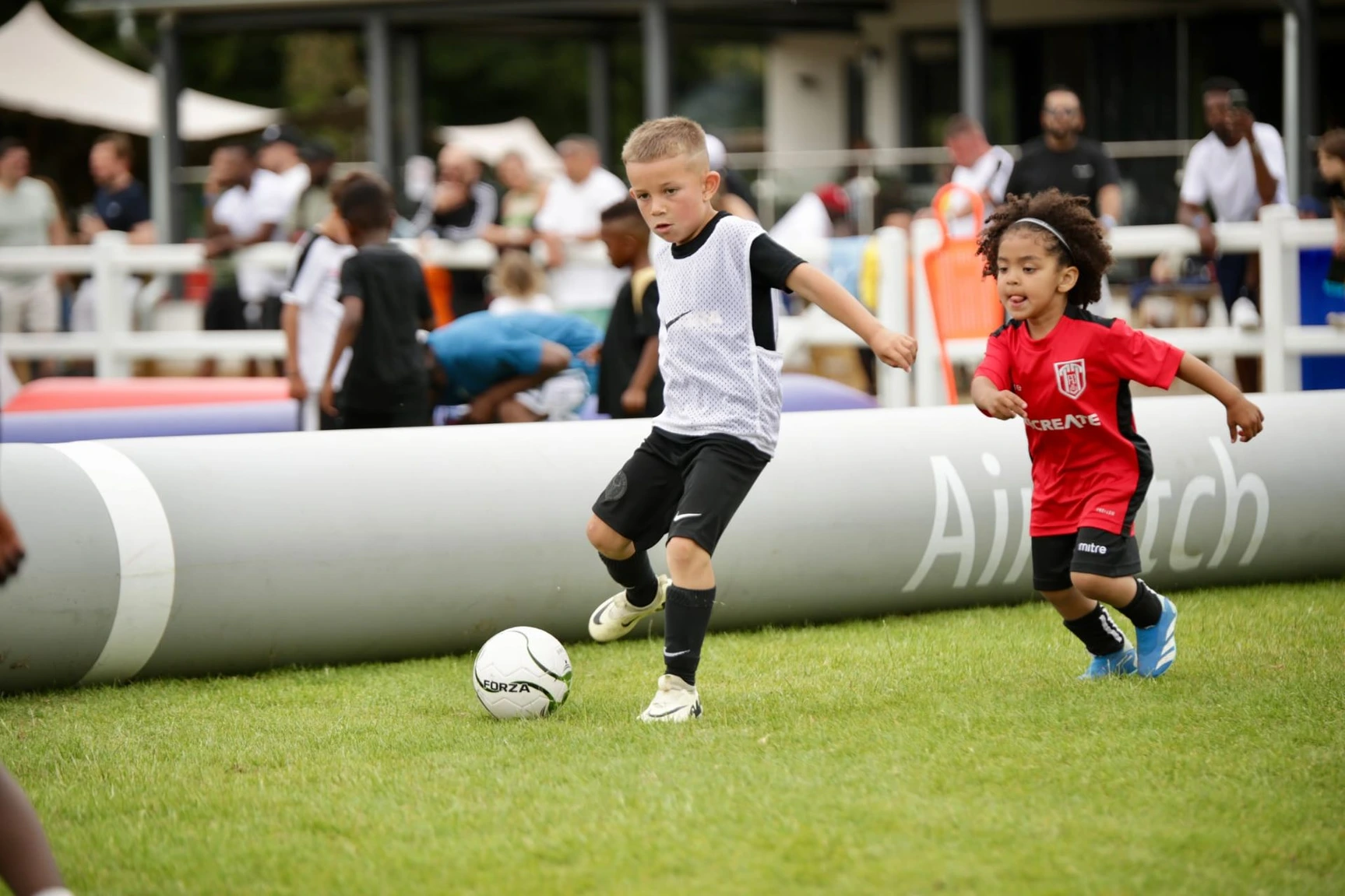
If you are on the pitch, you are in the game. You attack, defend, dribble, pass, recover, and probably score a goal that you will describe for the next 14 years as “top bins” even if it rolled in off someone’s welly. The FA says 3v3 gives young players more touches, more playing time, and more chances to try individual skills while still encouraging teamwork and movement.
Supporters of 3v3 also love the equal time angle. Future Fit says the format is built around every child playing the maximum time possible, with no substitutions, and recommends 30 to 40 minutes per child, with a maximum of 60. That means less “put little Oliver on for 90 seconds because it’s his turn” and more actual football for everyone.
And let’s be honest, at U7 this makes enormous sense.
Most children do not wake up dreaming of maintaining a compact mid-block. They want the ball. They want to run. They want to score. They want to nutmeg someone, even if they don’t yet know it’s called a nutmeg. A format that puts them nearer the action feels less like adult football shrunk down badly and more like child football built properly.
The case against 3v3: yes, but who is sorting all this out?
Now let us hear from the other side, the grassroots coach, coffee in one hand, WhatsApp notifications in the other, staring into the middle distance and quietly asking, “Lovely idea… but where exactly am I putting all these pitches?”
Because while the developmental case sounds strong, grassroots people do not live in theory. They live in real life. And real life says:
space is tight
volunteers are stretched
equipment costs money
and anything that sounds simple in a presentation can become absolute carnage on a wet Sunday morning
The FA has already acknowledged that national rollout has to deal with practical challenges including goals, space, coaching courses and safeguarding.
That one sentence probably caused 4,000 youth coaches to nod so hard they nearly pulled a neck muscle.
The sceptics’ argument is not always “3v3 is bad.” Quite often it is, “3v3 is fine, but who’s paying for more goals, marking out more areas, training the adults, and explaining to Dave from the committee why one team is suddenly playing two games at once on half a field?”
Future Fit says clubs do not necessarily need more teams because a recommended match day squad is six to 12 players and multiple games can run at once, with teams mixed as needed. It also says 3v3 will not necessarily require more coaches or volunteers, though two FA DBS-checked, safeguarding-trained adults are needed as pitch facilitators.
Which is reassuring on paper.
But grassroots football has a special ability to turn “not necessarily” into “someone’s mum is now running a second pitch with two cones and a Costa.”
Then there is the classic traditionalist concern: “Isn’t football meant to be proper football?” This is usually said by people whose idea of proper football for a six year old involves kick offs, positions, a league table, and at least one child being told to “get wider” before they have learned to tie their own laces.
For that crowd, 3v3 can feel suspiciously modern. Too free. Too chaotic. Too much like fun.
And that may be the real issue.
The secret truth: adults may be the ones struggling most
Children, by all accounts, tend to get on with it.
Future Fit says 3v3 has already been trialled across England, with 20 leagues acting as early adopters during 2025/26, and it reports that children enjoy it. Players cited dribbling and passing, while coaches described more touches, more shots and more smiles.
In other words, the kids are basically saying:
“This is great. More football please.”
Meanwhile adults are in the car park debating whether a 3v3 Pitch Facilitator is a referee, a coach, a game guide, or an unfortunate volunteer who arrived five minutes early and made eye contact.
Future Fit’s answer is that facilitators help children learn the rules, then gradually step back as players begin to manage their own games.
Which, if we are honest, sounds healthier than the old model of adults screaming “LET IT RUN!” at children who are still processing what “out for a throw” actually means.

So… to 3v3 or not to 3v3?
That depends on what you believe U7 football is for.
If you think it is mainly a simplified version of the adult game, you may look at 3v3 and mutter darkly about the death of tradition.
If you think it is the first chapter in a child’s football story where touches matter, confidence matters, decision making matters, and enjoyment matters most. Then 3v3 starts to look less like a gimmick and more like common sense. That is very much the direction the FA says it is taking with Future Fit.
The funniest part of the whole debate is this:
For years, coaches have said they want players who are better on the ball, more creative, more confident in 1v1s, smarter in small spaces, and more involved in the game.
Then someone says, “Fine, let’s give them a format with more touches, more decisions, more movement and more involvement.”
And half the room replies, “Yes, but not like that.”
Classic grassroots football.
Final whistle
So, to 3v3 or not to 3v3?
For the kids, probably yes.
For the organisers, also yes, but with a strong cup of tea, extra cones, and a proper plan.
For the grumblers, definitely yes, because nothing in football has ever truly arrived until someone has complained about it on the touchline.
And maybe that is the perfect ending.
Because if U7 football becomes a little busier, a little noisier, a little more chaotic, and a lot more fun, then perhaps the real answer was never in doubt.
To 3v3. Obviously.
Written by Mike Melvin
Managing Director of 3v3 UK
For questions, partnerships and support around the changed please contact info@3v3.co.uk